In the middle of a lovely holiday, someone checks: “Am I happy enough?” Photos are taken; the moment is supposed to be special. When the expected delight does not appear, the inability to feel happy becomes louder than the holiday.
Why can wanting happiness make it harder to experience?
When emotion becomes a target
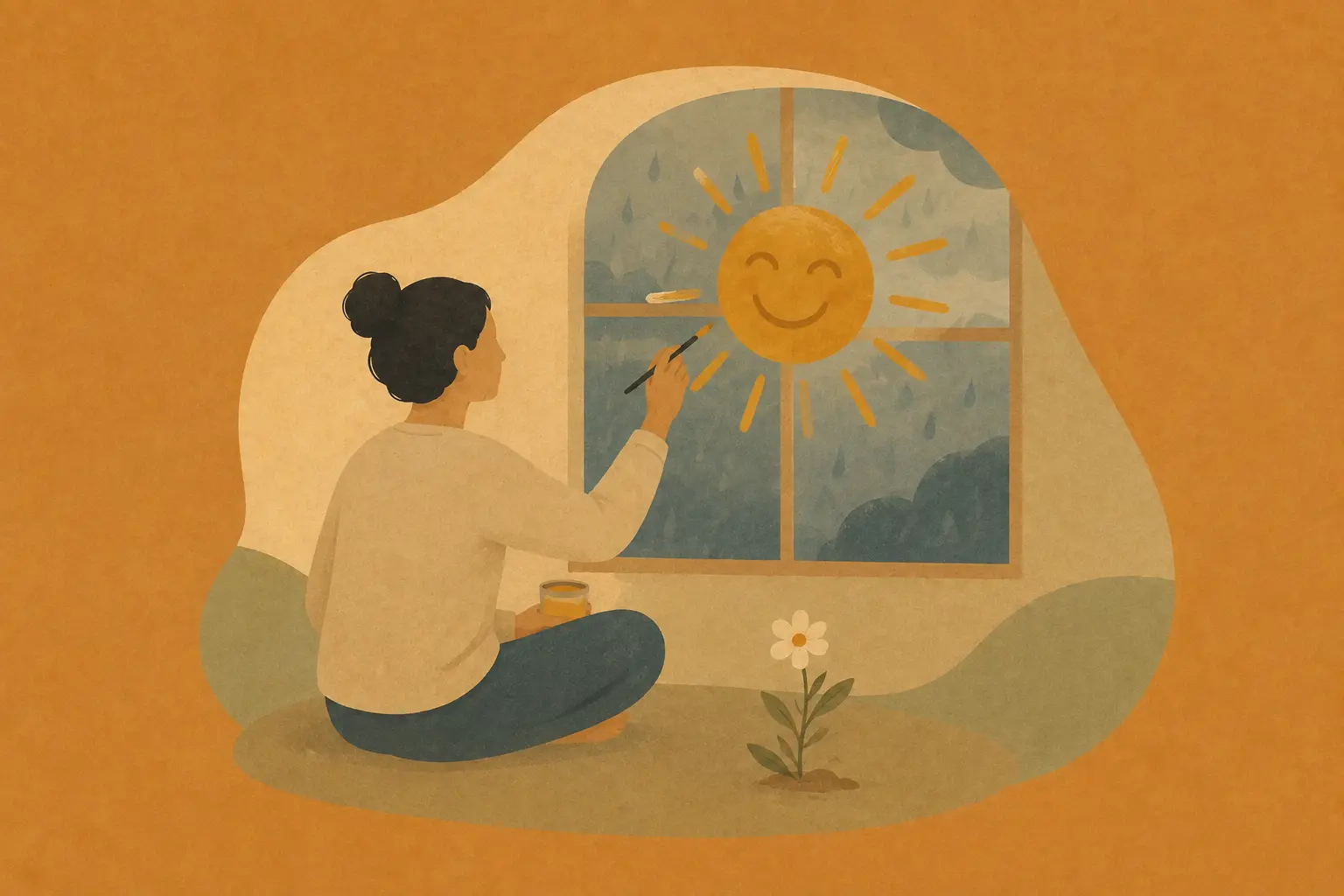
Happiness is valuable, but continual measurement can turn it into a pressured performance. “I should be happy now” enlarges the distance between present and ideal feelings. Ordinary peace seems insufficient; sadness becomes personal failure.
Iris Mauss and colleagues’ (2011) research suggests that valuing happiness excessively can be associated with disappointment, particularly in circumstances expected to be positive. The difficulty is treating happiness as mandatory and continuous rather than simply wanting to feel good.
From Aristippus to Aristotle
Philosophy has approached pleasure in different ways. Aristippus emphasizes immediate pleasure, while Aristotle considers the good life more broadly than separate pleasant feelings: virtuous activity, relationships, and life as a whole matter. This remains useful today. A good life is not identical to feeling good every moment. John Stuart Mill’s distinction between higher and lower pleasures in Utilitarianism also resists reducing happiness to a one-dimensional sum of pleasure.
Telling a friend a difficult truth, raising children, or working at something meaningful may not always feel pleasant. They may still be valuable. Using happiness as the only measure risks labeling meaningful but difficult experiences wrong.
Not assigning emotions a task
Sadness may signal loss, anger a boundary violation, fear a possible threat. Trying immediately to convert every negative feeling into a positive one prevents us from hearing that information. Acceptance means recognizing what is happening and choosing an appropriate action, rather than surrendering to emotion.
Instead of “How can I become happy immediately?” we can ask, “What am I experiencing, and what matters to me?” Turning attention from an emotional outcome toward valued action may paradoxically create room for more natural positive experiences.
Seeing happiness as a by-product
Happiness sometimes arrives as a by-product of connection, curiosity, contribution, and rest rather than an object directly captured. We can notice its arrival and allow its departure. No emotion remains continuously.
The good life has a wider measure than minutes spent happy. Making room for pain does not make a life deficient. When we stop forcing happiness, quieter tones—interest, closeness, competence, meaning—may become audible.
Reducing happiness monitoring
Constantly rating mood shifts attention from experience to evaluation. Try setting aside “How happy am I, as a percentage?” and noticing sensory detail: a sentence in conversation, a taste, a walking rhythm. Pleasure may become more accessible when it is not being measured.
Social comparison can also raise expectations. Comparing others’ selected, edited moments with all the days of our own lives makes ordinary feelings look defective. Boundaries around content that leaves us feeling inadequate can protect emotional space.
On a difficult day, the aim can be smaller than happiness: care for the body, contact someone honestly, or continue an important task for five minutes. These do not guarantee joy, but reconnect us with values. They provide ground on which life can continue whether happiness arrives or leaves.
Lightening happiness’s burden
- Against which ideal am I judging my present feeling insufficient?
- Which actual emotion is obscured by trying to appear happy?
- What do I value today independently of feeling good?
These questions do not diminish happiness. They let it be a valued, changing visitor rather than life’s ruler.
A week can be reviewed more broadly than a scorecard of happiness. Record moments of rest, curiosity, belonging, and meaning alongside joy. A good life does not consist of one elevated feeling. On some days, success means maintaining a valued action without denying a difficult emotion. This does not reduce positive feelings; it lightens the performance demand placed on them.
References
- Aristotle. (1999). Nicomachean ethics (T. Irwin, Trans.; 2nd ed.). Hackett.
- Mauss, I. B., Tamir, M., Anderson, C. L., & Savino, N. S. (2011). Can seeking happiness make people unhappy? Emotion, 11(4), 807–815. https://doi.org/10.1037/a0022010
- Mill, J. S. (2001). Utilitarianism (G. Sher, Ed.). Hackett.