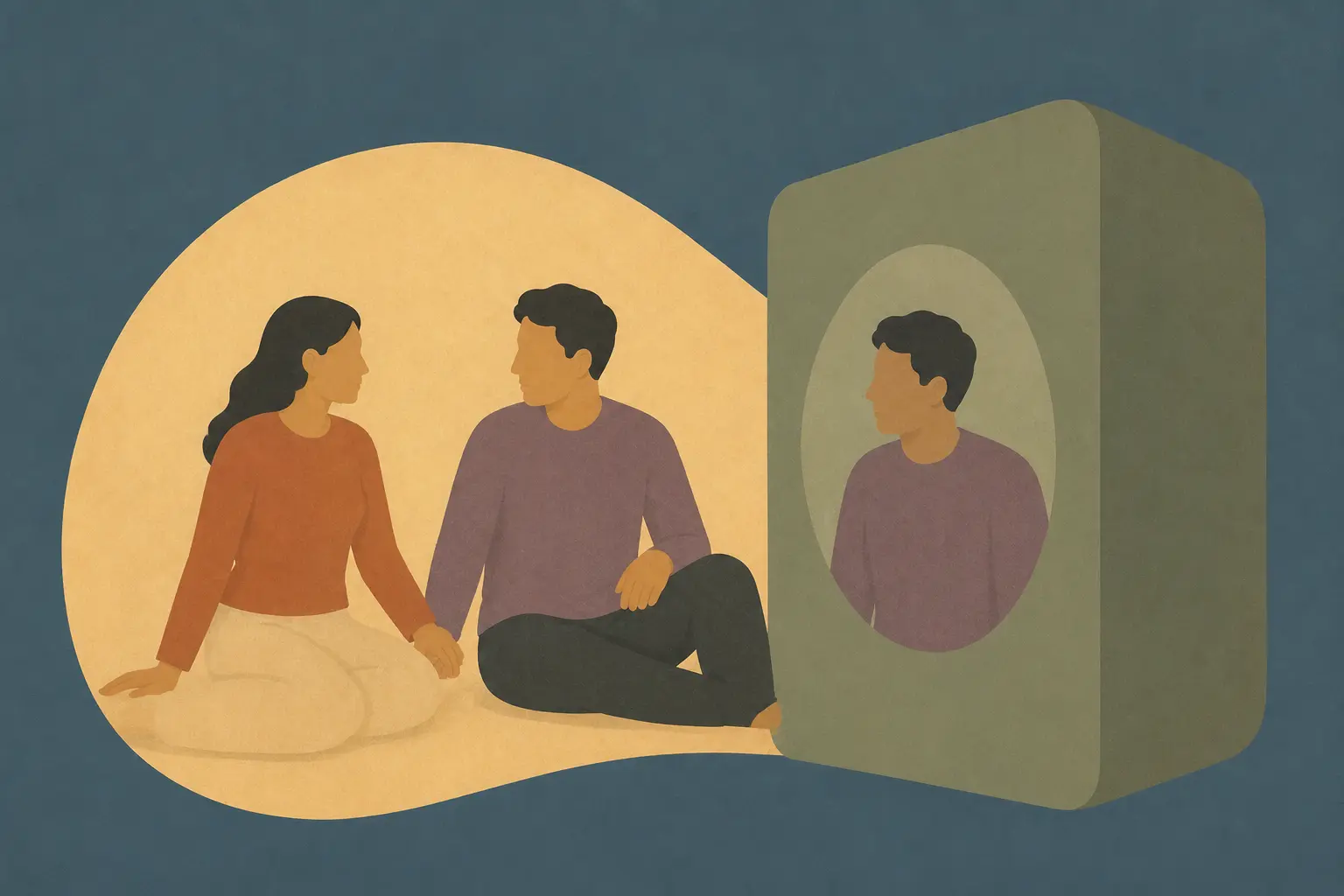
There are dozens of photos from their holiday together. Their partner posts the scenery, the food, and the hotel, but none of the two of them. At first, they try not to mind. Then the same question keeps returning: “Why are they hiding me?”
Not showing a relationship on social media is not, by itself, evidence of indifference, shame, or infidelity. Some people dislike putting their private lives online. Others protect a relationship by limiting its visibility. Others may indeed want to keep their options open, conceal the relationship from certain people, or exclude their partner from their public identity. The same behavior can carry different intentions.
Why has visibility become so meaningful?
Social media is more than a place where we describe our lives. It is a stage on which we shape how others see us. Making a relationship visible on a profile has become one way of telling the world, “I am part of this bond.” Being absent can therefore feel like a lack of public acknowledgment, rather than merely a posting preference.
Emery and colleagues’ studies of Facebook found that relationship visibility could be associated with attachment patterns. People with higher attachment anxiety could be more inclined to make their relationships visible, while avoidance was associated with lower visibility. These findings do not allow us to diagnose attachment from someone’s profile. Social media use is also shaped by generation, profession, safety, culture, and personal privacy preferences.
The difference between privacy and being hidden
Privacy involves a couple choosing to keep certain parts of life to themselves. Being hidden often means one person does not want the relationship’s existence known, while the other must accept that decision. From outside, both may look like “not posting.” From inside, they feel different.
Several distinctions matter. Does your partner generally keep their private life offline, or do they leave out only you? Do the people close to them know about the relationship? Do they specifically avoid photos together? When you raise the subject, do they explain their boundary clearly, or belittle you and shut down the conversation?
Someone can openly acknowledge and stand by a relationship without posting a single photograph. Someone else may post couple photos daily while investing very little in the relationship privately. Digital visibility is a sign of a relationship, not the relationship itself.
The two faces of Janus
In Roman mythology, Janus is the god of doorways and transitions, with one face looking toward the past and the other toward the future. Social media also gives relationships two faces: the bond lived privately and the image presented publicly. They need not be identical. The problem begins when the gap between them becomes too large to discuss.
For some couples, sharing a photo expresses belonging and pride. Others find opening the relationship to public attention uncomfortable. There is no universally correct amount to post. But if one person seeks security through visibility while the other seeks freedom through invisibility, the argument points to a disagreement deeper than the photograph itself.
What lies beneath the request to be posted?
“Post about me” may be a request for acknowledgment more than a photograph: “I want to see that you are giving me an open place in your life.” Equally, “I don’t want to post” is not always rejection. It may mean “I want a say over my private life.”
The conversation needs to move beyond judgments such as “People who love you post about you” or “People who trust their partner don’t need this.” Instead, we might ask: “What fear does being absent from your posts bring up in me?” “Why does online visibility feel uncomfortable to you?” “How do we acknowledge our relationship outside social media?”
A relationship’s absence from a screen does not mean it is absent from real life. But when someone is repeatedly erased from their partner’s life, never introduced, and kept in uncertainty, the issue goes beyond privacy. Meaning lies less in the number of photographs than in how open, mutual, and acknowledged the relationship is between the people living it.
References
- Emery, L. F., Muise, A., Dix, E. L., & Le, B. (2014). Can you tell that I’m in a relationship? Attachment and relationship visibility on Facebook. Personality and Social Psychology Bulletin, 40(11), 1466–1479. https://doi.org/10.1177/0146167214549944
- Saslow, L. R., Muise, A., Impett, E. A., & Dubin, M. (2013). Can you see how happy we are? Facebook images and relationship satisfaction. Social Psychological and Personality Science, 4(4), 411–418. https://doi.org/10.1177/1948550612460059
- Toma, C. L., & Choi, M. (2015). The couple who Facebooks together, stays together: Facebook self-presentation and relationship longevity among college-aged dating couples. Cyberpsychology, Behavior, and Social Networking, 18(7), 367–372. https://doi.org/10.1089/cyber.2015.0060